Breeds Foundation Stock Service
American Bulldog
Also known as AmBull, Old Country Bulldog
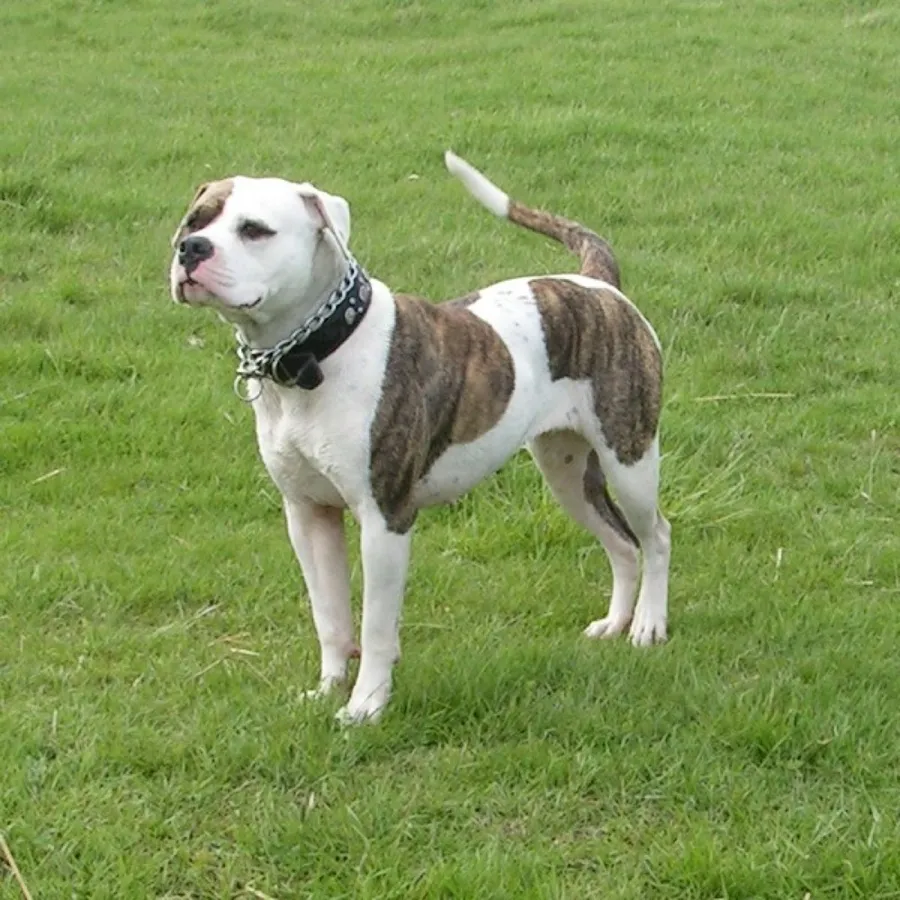
The American Bulldog descends from working bulldogs brought to the American South by European settlers, where they helped manage semi-wild cattle and hogs and watched over the farm. After World War II, breeders such as John D. Johnson and Alan Scott worked to keep the type from disappearing. It is an athletic, affectionate family dog that is often watchful around strangers. AKC has approved the breed to move into the Miscellaneous Class effective June 30, 2027.
At a glance
- Origin
- United States
- Developed
- 1700s–1800s; preserved in the mid-1900s
- Bred for
- Farm work: catching livestock, guarding the homestead, and controlling vermin
- Height
- 20–27 in
- Weight
- 60–120 lb
- Life span
- 10–15 years
- Size
- Large
- Coat
- Short, close coat; usually white or white with patches of brindle, red, or other colors
- Grooming
- Low
- Shedding
- Moderate
- Exercise
- About an hour a day, plus play and training
- Recognized by
- United Kennel Club
Good to know
American Bulldogs are strong and energetic, so early leash training and socialization with people and dogs set them up for success. They thrive with daily exercise and clear, consistent training.
Health considerations
- Hip dysplasia
- Elbow dysplasia
- Neuronal ceroid lipofuscinosis
- Ichthyosis
Conditions breed clubs commonly screen for. Not every dog will have them. Ask your veterinarian about your own dog.
Did you know?
Fans often describe two classic types named for their preservers: the stockier “Johnson” (bully) type and the more athletic “Scott” (standard) type.
Foundation Stock Service group
An AKC record-keeping program for rare and developing breeds that are not yet fully recognized. Many are well established in their home countries.
Every American Bulldog is an individual.
Breed traits are tendencies, not guarantees. Your dog's genetics, early life, health, and everyday experiences all shape who they are. If you'd like help understanding the dog in front of you, let's talk.
Start a conversation