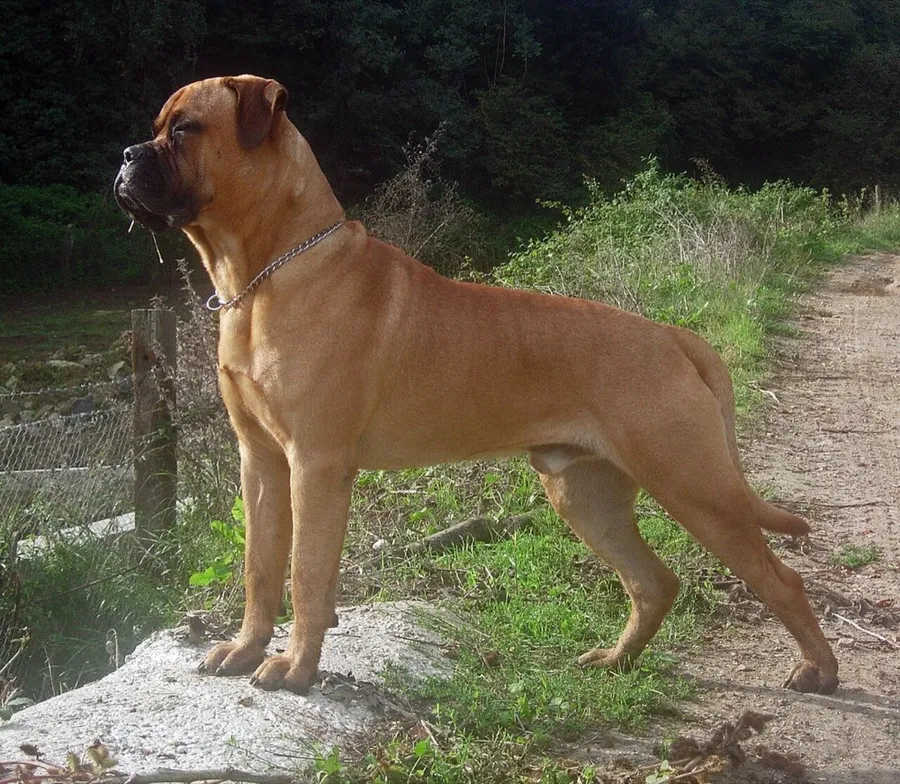
Breeds Working
Bullmastiff
Also known as Gamekeeper's Night Dog
The Bullmastiff was developed by English gamekeepers who crossed Mastiffs with Bulldogs to create a quiet, powerful dog that could track and hold poachers without mauling them. The breed was recognized by the Kennel Club in 1924 and the AKC in 1933. Today Bullmastiffs are mellow, affectionate housemates who are reserved with strangers.
At a glance
- Origin
- England
- Developed
- Mid-1800s
- Bred for
- Helping gamekeepers catch and hold poachers on English estates
- Height
- 24–27 in
- Weight
- 100–130 lb
- Life span
- 7–9 years
- Size
- Giant
- Coat
- Short, dense coat; fawn, red, or brindle with a dark muzzle
- Grooming
- Low
- Shedding
- Moderate
- Exercise
- Moderate daily walks; avoid strenuous exercise in heat
- Recognized by
- American Kennel Club, United Kennel Club, Fédération Cynologique Internationale, Canadian Kennel Club, The Kennel Club (UK)
Good to know
Start socialization and leash training early, since adult Bullmastiffs are very strong. They are sensitive to heat and prone to drooling. Keep them lean to protect their joints.
Health considerations
- Hip dysplasia
- Elbow dysplasia
- Gastric dilatation-volvulus (bloat)
- Lymphoma and other cancers
Conditions breed clubs commonly screen for. Not every dog will have them. Ask your veterinarian about your own dog.
Did you know?
Bullmastiffs were prized for working silently at night, which earned them the nickname 'Gamekeeper's Night Dog.'
Working group
Guardians, sled dogs, draft dogs, and rescue dogs. Often large and strong, intelligent, and capable of serious work. Early socialization and consistent training matter.
Every Bullmastiff is an individual.
Breed traits are tendencies, not guarantees. Your dog's genetics, early life, health, and everyday experiences all shape who they are. If you'd like help understanding the dog in front of you, let's talk.
Start a conversation