Breeds Working
Dogue de Bordeaux
Also known as French Mastiff, Bordeaux Mastiff, DDB
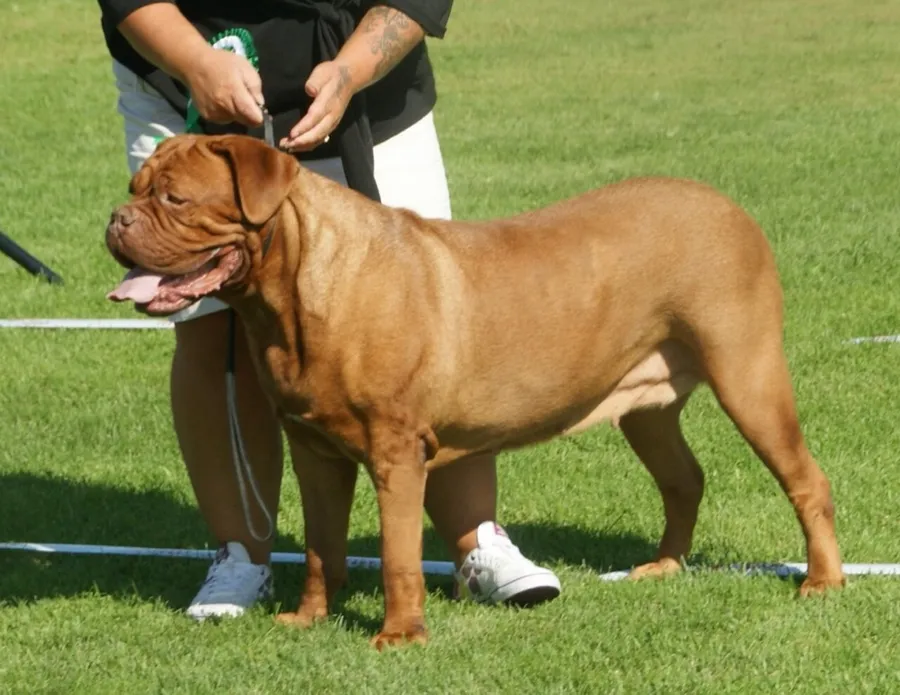
The Dogue de Bordeaux is one of France's oldest breeds, working in the Bordeaux region as an estate guardian, hunter of large game, and draft dog. Its massive head is among the largest in the dog world relative to body size. At home, the Dogue is calm, affectionate, and devoted, while remaining watchful with strangers.
At a glance
- Origin
- France
- Developed
- 1300s or earlier
- Bred for
- Guarding estates, hunting large game, and draft work
- Height
- 23–27 in
- Weight
- 99–110+ lb
- Life span
- 5–8 years
- Size
- Giant
- Coat
- Short, fine, soft coat; shades of fawn from light to mahogany, with or without a black or brown mask
- Grooming
- Low
- Shedding
- Moderate
- Exercise
- Moderate daily walks; avoid strenuous exercise in heat
- Recognized by
- American Kennel Club, United Kennel Club, Fédération Cynologique Internationale, Canadian Kennel Club, The Kennel Club (UK)
Good to know
Start socialization and leash manners early, since adults are very strong. Dogues are heat-sensitive, drool heavily, and need their facial folds kept clean. Their short life span makes health-focused breeder selection especially important.
Health considerations
- Dilated cardiomyopathy and aortic stenosis
- Hip dysplasia
- Gastric dilatation-volvulus (bloat)
- Cancers
Conditions breed clubs commonly screen for. Not every dog will have them. Ask your veterinarian about your own dog.
Did you know?
A Dogue de Bordeaux played Hooch opposite Tom Hanks in the 1989 film 'Turner & Hooch,' which helped popularize the breed in the United States.
Working group
Guardians, sled dogs, draft dogs, and rescue dogs. Often large and strong, intelligent, and capable of serious work. Early socialization and consistent training matter.
Every Dogue de Bordeaux is an individual.
Breed traits are tendencies, not guarantees. Your dog's genetics, early life, health, and everyday experiences all shape who they are. If you'd like help understanding the dog in front of you, let's talk.
Start a conversation