Breeds Herding
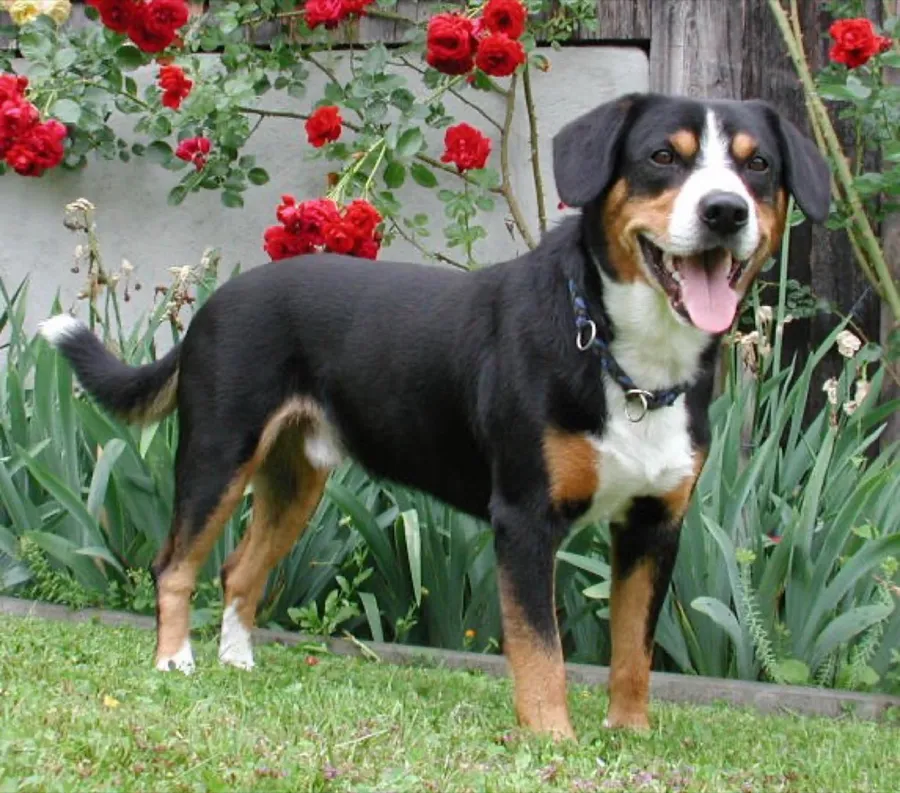
Entlebucher Mountain Dog
Also known as Entlebucher Sennenhund, Entlebucher Cattle Dog, Entle
The smallest of the four Swiss mountain dog breeds, the Entlebucher comes from the Entlebuch valley in central Switzerland, where it drove cattle between pastures. Compact and agile, it shares the classic tricolor coat of its larger cousins, the Bernese Mountain Dog and Greater Swiss Mountain Dog. Entles are lively, devoted dogs that bond strongly with their families.
At a glance
- Origin
- Switzerland
- Developed
- Old farm type; first described in 1889
- Bred for
- Driving cattle in the Swiss Alps
- Height
- 16–21 in
- Weight
- 40–65 lb
- Life span
- 11–13 years
- Size
- Medium
- Coat
- Short, close, harsh double coat; tricolor black with white and tan markings
- Grooming
- Low
- Shedding
- Seasonal
- Exercise
- 1 hour or more a day of active exercise plus training
- Recognized by
- American Kennel Club, United Kennel Club, Fédération Cynologique Internationale, Canadian Kennel Club
Good to know
Entlebuchers have more energy and herding drive than their size suggests and do best with daily activity and a job to do. Early socialization helps, as they tend to be reserved with strangers.
Health considerations
- Hip dysplasia
- Elbow dysplasia
- Progressive retinal atrophy
- Ectopic ureter
Conditions breed clubs commonly screen for. Not every dog will have them. Ask your veterinarian about your own dog.
Did you know?
The Entlebucher is the only one of the four Swiss Sennenhund breeds placed in the AKC Herding Group; the others are in the Working Group.
Herding group
Dogs developed to gather, drive, and protect livestock. Usually intelligent, responsive, and energetic, with a strong instinct to control movement.
Every Entlebucher Mountain Dog is an individual.
Breed traits are tendencies, not guarantees. Your dog's genetics, early life, health, and everyday experiences all shape who they are. If you'd like help understanding the dog in front of you, let's talk.
Start a conversation