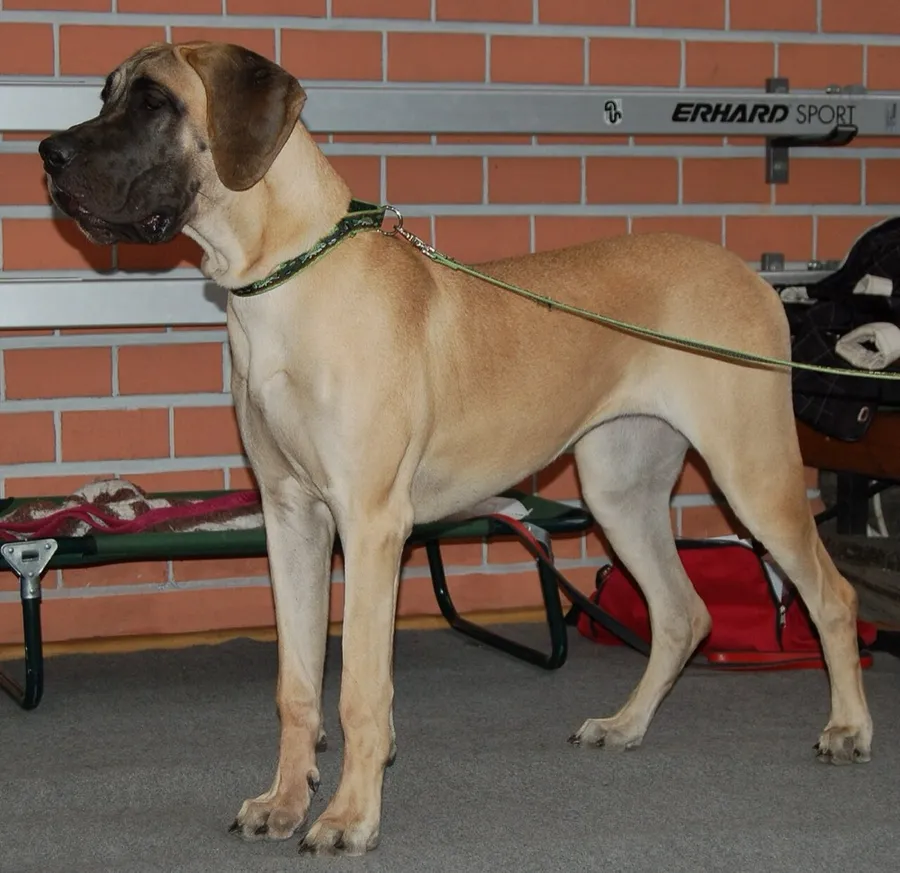
Breeds Working
Great Dane
Also known as Deutsche Dogge, German Mastiff, Dane
Despite its name, the Great Dane was developed in Germany, where it hunted wild boar and later guarded noble estates. Over time the breed was refined into an elegant, gentle companion. Great Danes are typically friendly, patient, and affectionate, earning the nickname 'gentle giants.'
At a glance
- Origin
- Germany
- Developed
- 1500s–1800s
- Bred for
- Hunting wild boar; later estate guardian and companion
- Height
- 28–32 in
- Weight
- 110–175 lb
- Life span
- 7–10 years
- Size
- Giant
- Coat
- Short, thick, smooth coat; fawn, brindle, blue, black, harlequin, mantle, or merle
- Grooming
- Low
- Shedding
- Moderate
- Exercise
- Moderate daily walks and play; avoid strenuous exercise while growing
- Recognized by
- American Kennel Club, United Kennel Club, Fédération Cynologique Internationale, Canadian Kennel Club, The Kennel Club (UK)
Good to know
Train leash manners and polite greetings early, since an adult Dane is very large. Puppies should grow slowly on a large-breed diet without excessive high-impact exercise. Learn the signs of bloat, and ask your veterinarian about preventive gastropexy.
Health considerations
- Gastric dilatation-volvulus (bloat)
- Dilated cardiomyopathy
- Hip dysplasia
- Osteosarcoma
Conditions breed clubs commonly screen for. Not every dog will have them. Ask your veterinarian about your own dog.
Did you know?
The Great Dane is the official state dog of Pennsylvania.
Working group
Guardians, sled dogs, draft dogs, and rescue dogs. Often large and strong, intelligent, and capable of serious work. Early socialization and consistent training matter.
Every Great Dane is an individual.
Breed traits are tendencies, not guarantees. Your dog's genetics, early life, health, and everyday experiences all shape who they are. If you'd like help understanding the dog in front of you, let's talk.
Start a conversation