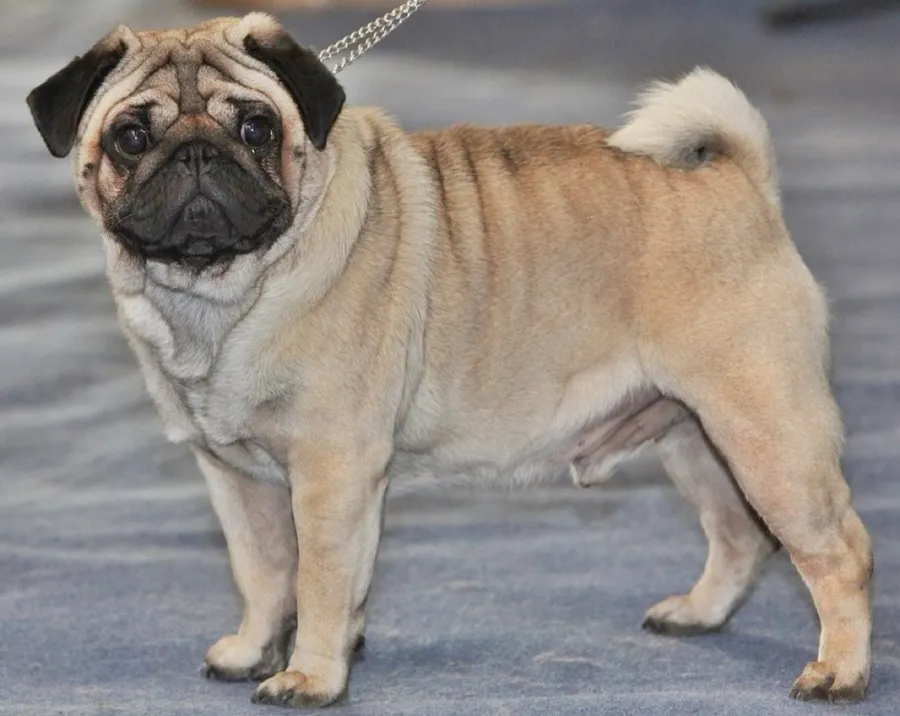
Breeds Toy
Pug
Also known as Mops, Carlin
Pugs originated in ancient China as companions to the ruling class. Dutch traders brought them to Europe in the 1500s, where they became favorites of the House of Orange. They later became popular in England and across Europe. The Pug is a sturdy, comical, and very sociable companion.
At a glance
- Origin
- China
- Developed
- Ancient
- Bred for
- Companionship
- Height
- 10–13 in
- Weight
- 14–18 lb
- Life span
- 13–15 years
- Size
- Small
- Coat
- Short, smooth, glossy coat; fawn or black, with a black mask on fawns
- Grooming
- Low
- Shedding
- Heavy
- Exercise
- About 30–45 minutes a day of easy walks and play
- Recognized by
- American Kennel Club, United Kennel Club, Fédération Cynologique Internationale, Canadian Kennel Club, The Kennel Club (UK)
Good to know
Pugs are sensitive to heat and exercise intolerance because of their short muzzles, so keep activity moderate and cool. Clean facial wrinkles regularly and watch their weight closely. Their prominent eyes can be injured easily.
Health considerations
- Brachycephalic airway syndrome
- Pug dog encephalitis
- Corneal ulcers
- Hip dysplasia
Conditions breed clubs commonly screen for. Not every dog will have them. Ask your veterinarian about your own dog.
Did you know?
A Pug named Pompey is credited with alerting William the Silent, Prince of Orange, to an attack in 1572, and the breed became a symbol of the House of Orange.
Toy group
Small companion breeds, many developed for life alongside people. Small in size but often big in personality; they still need training, enrichment, and gentle handling.
Every Pug is an individual.
Breed traits are tendencies, not guarantees. Your dog's genetics, early life, health, and everyday experiences all shape who they are. If you'd like help understanding the dog in front of you, let's talk.
Start a conversation