Breeds Working
Black Russian Terrier
Also known as BRT, Chornyi Terrier, Stalin's Dog
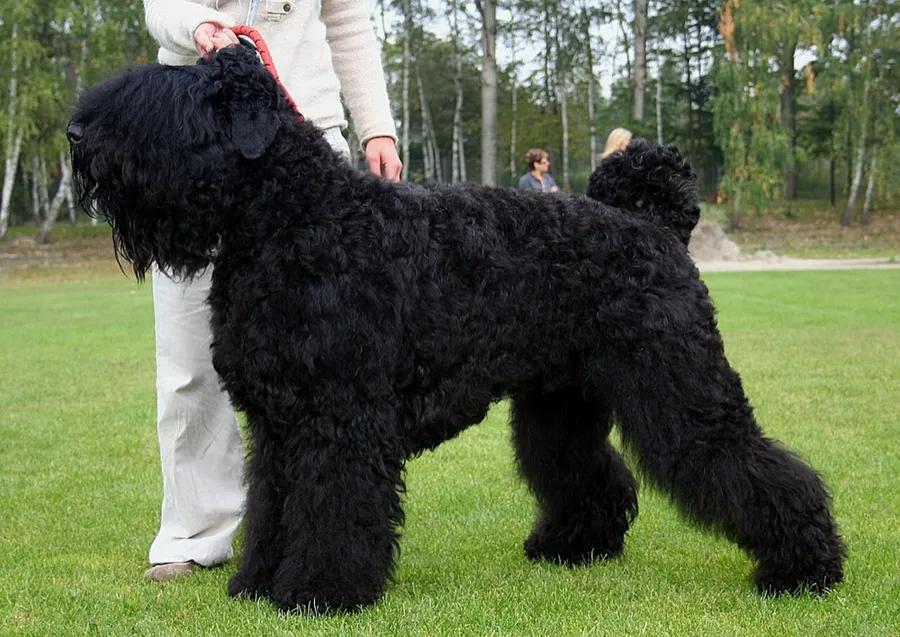
The Black Russian Terrier was developed by the Soviet army's Red Star Kennel in Moscow after World War II, combining breeds such as the Giant Schnauzer, Airedale Terrier, and Rottweiler. The goal was a hardy, trainable working dog that could handle harsh climates. Despite the name, the BRT is not a true terrier; it is a calm, confident companion that bonds closely with its family and is reserved with strangers.
At a glance
- Origin
- Russia (former Soviet Union)
- Developed
- 1940s–1950s
- Bred for
- Military and guard work
- Height
- 26–30 in
- Weight
- 80–130 lb
- Life span
- 10–12 years
- Size
- Large
- Coat
- Tousled, coarse, slightly wavy double coat; solid black or black with scattered gray hairs
- Grooming
- High
- Shedding
- Minimal
- Exercise
- About 1 hour a day of walks, play, and training
- Recognized by
- American Kennel Club, United Kennel Club, Fédération Cynologique Internationale, Canadian Kennel Club, The Kennel Club (UK)
Good to know
BRTs need early socialization and consistent, fair training, and they want to be with their people rather than left alone. The coat needs regular brushing and periodic trimming to prevent mats.
Health considerations
- Hip dysplasia
- Elbow dysplasia
- Hyperuricosuria
- Juvenile laryngeal paralysis and polyneuropathy
Conditions breed clubs commonly screen for. Not every dog will have them. Ask your veterinarian about your own dog.
Did you know?
The breed was developed by crossing an estimated 17 breeds at the Red Star Kennel, with the Giant Schnauzer as a major foundation.
Working group
Guardians, sled dogs, draft dogs, and rescue dogs. Often large and strong, intelligent, and capable of serious work. Early socialization and consistent training matter.
Every Black Russian Terrier is an individual.
Breed traits are tendencies, not guarantees. Your dog's genetics, early life, health, and everyday experiences all shape who they are. If you'd like help understanding the dog in front of you, let's talk.
Start a conversation