Breeds Hound
Bloodhound
Also known as St. Hubert Hound, Chien de Saint-Hubert
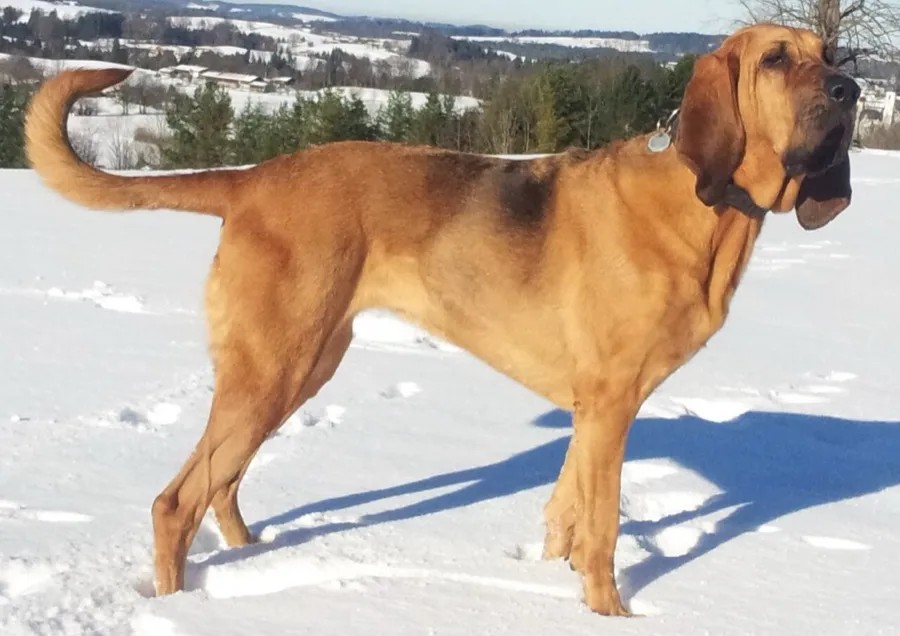
The Bloodhound traces back to hounds kept by monks at the Abbey of St. Hubert in medieval Belgium. Its exceptional nose, loose skin, and long ears make it the premier trailing breed, and it has long been used by search-and-rescue teams and law enforcement. Bloodhounds are typically gentle and affectionate.
At a glance
- Origin
- Belgium and France; refined in England
- Developed
- Middle Ages
- Bred for
- Trailing deer and boar by scent; later tracking people
- Height
- 23–27 in
- Weight
- 80–110 lb
- Life span
- 10–12 years
- Size
- Large
- Coat
- Short, dense coat; black and tan, liver and tan, or red
- Grooming
- Low
- Shedding
- Moderate
- Exercise
- About an hour a day of long walks, ideally with tracking or scent work
- Recognized by
- American Kennel Club, United Kennel Club, Fédération Cynologique Internationale, Canadian Kennel Club, The Kennel Club (UK)
Good to know
Bloodhounds drool, and their facial folds and long ears need regular cleaning. They mature slowly and follow their nose, so patience and secure containment are key.
Health considerations
- Bloat (gastric dilatation-volvulus)
- Hip dysplasia
- Elbow dysplasia
- Ectropion and entropion
Conditions breed clubs commonly screen for. Not every dog will have them. Ask your veterinarian about your own dog.
Did you know?
Bloodhound trailing evidence has been accepted in some U.S. courts.
Hound group
Dogs bred to hunt by scent (like Beagles and Bloodhounds) or by sight and speed (like Greyhounds and Salukis). Many are independent thinkers with strong instincts to follow a trail or chase.
Every Bloodhound is an individual.
Breed traits are tendencies, not guarantees. Your dog's genetics, early life, health, and everyday experiences all shape who they are. If you'd like help understanding the dog in front of you, let's talk.
Start a conversation