Breeds Non-Sporting
Boston Terrier
Also known as American Gentleman, Boston Bull
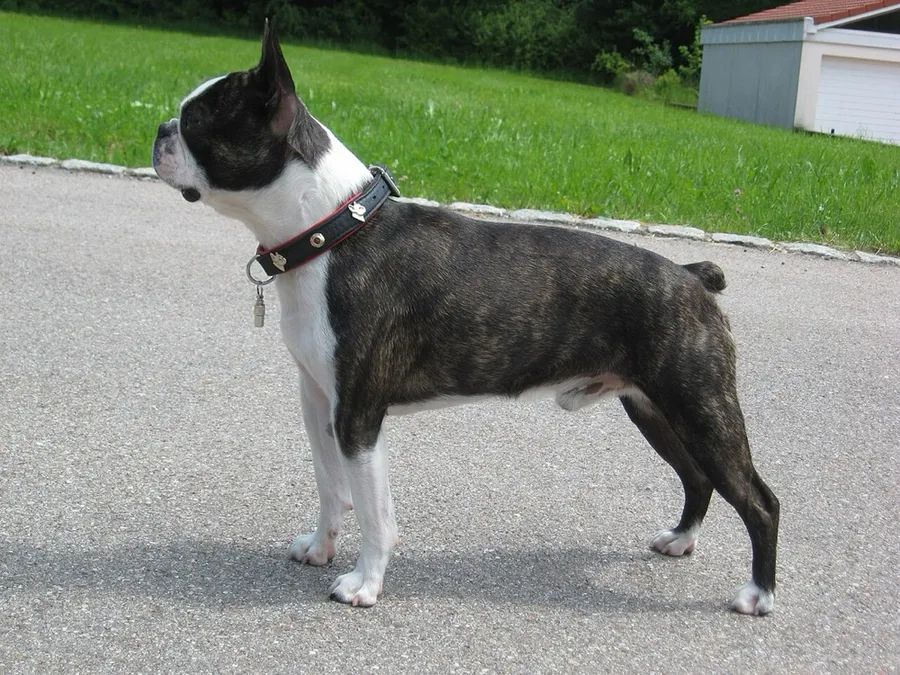
The Boston Terrier was developed in Boston, Massachusetts, from a dog named Judge, a cross between a Bulldog and an English White Terrier. Breeders refined it into a smaller, friendly companion. The AKC recognized it in 1893, making it one of the first American-developed breeds. Its neat tuxedo markings earned it the nickname "American Gentleman."
At a glance
- Origin
- United States
- Developed
- 1870s
- Bred for
- Companionship (developed from Bulldog and English White Terrier crosses)
- Height
- 15–17 in
- Weight
- 12–25 lb
- Life span
- 11–13 years
- Size
- Small
- Coat
- Short, smooth coat; brindle, seal, or black with white markings
- Grooming
- Low
- Shedding
- Minimal
- Exercise
- About 30–60 minutes a day of walks and play
- Recognized by
- American Kennel Club, United Kennel Club, Fédération Cynologique Internationale, Canadian Kennel Club, The Kennel Club (UK)
Good to know
Boston Terriers are sensitive to heat because of their short muzzles, so keep exercise moderate in warm weather. Their prominent eyes can be injured easily. They are eager learners who do well with clear, consistent training.
Health considerations
- Brachycephalic airway syndrome
- Corneal ulcers
- Cataracts
- Patellar luxation
Conditions breed clubs commonly screen for. Not every dog will have them. Ask your veterinarian about your own dog.
Did you know?
The Boston Terrier is the official state dog of Massachusetts, adopted in 1979.
Non-Sporting group
A varied group of breeds with different histories, from the Dalmatian and Chow Chow to the Bulldog and Poodle. Size, coat, and energy vary widely.
Every Boston Terrier is an individual.
Breed traits are tendencies, not guarantees. Your dog's genetics, early life, health, and everyday experiences all shape who they are. If you'd like help understanding the dog in front of you, let's talk.
Start a conversation