Breeds Sporting
Irish Red and White Setter
Also known as IRWS
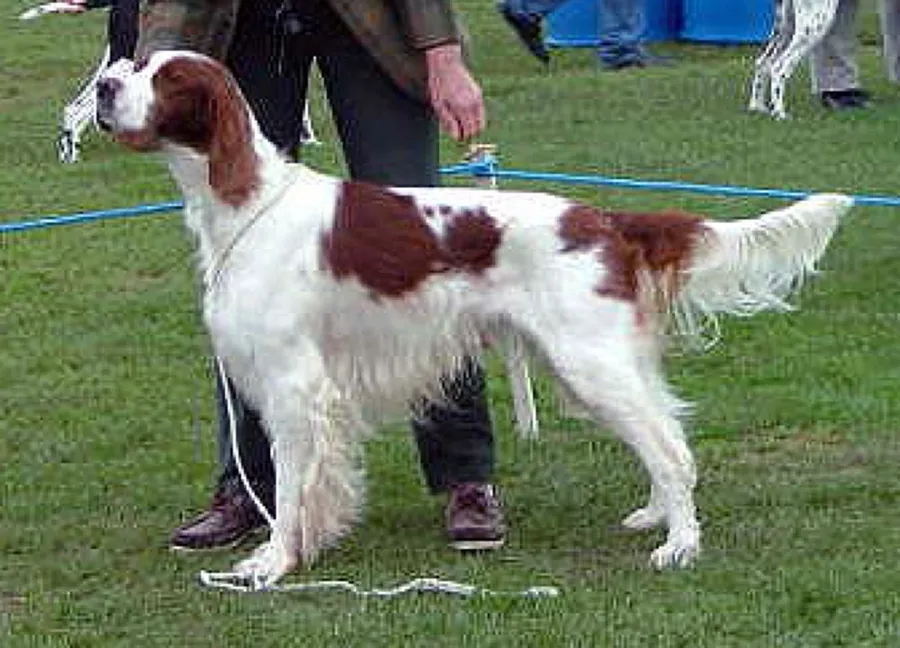
The Irish Red and White Setter is believed to be the older of Ireland's two setter breeds, predating the solid red Irish Setter. As the solid red dogs grew more popular in the 1800s, the red-and-white type became rare and nearly disappeared. Dedicated Irish breeders revived it in the 1900s, and the AKC recognized it in 2009.
At a glance
- Origin
- Ireland
- Developed
- 1600s–1700s
- Bred for
- Locating and pointing game birds
- Height
- 22.5–26 in
- Weight
- 50–70 lb
- Life span
- 11–15 years
- Size
- Large
- Coat
- Flat, straight, silky coat with feathering; white base with solid red patches
- Grooming
- Moderate
- Shedding
- Moderate
- Exercise
- 1 hour or more a day of active exercise
- Recognized by
- American Kennel Club, United Kennel Club, Fédération Cynologique Internationale, Canadian Kennel Club, The Kennel Club (UK)
Good to know
These setters need plenty of daily exercise and do well with patient, consistent training. Brush the feathering regularly to prevent tangles.
Health considerations
- Hip dysplasia
- Canine leukocyte adhesion deficiency (CLAD)
- Von Willebrand disease
- Posterior polar cataract
Conditions breed clubs commonly screen for. Not every dog will have them. Ask your veterinarian about your own dog.
Did you know?
The Irish Red and White Setter is generally considered to be the original Irish setter, with the solid red breed developing later.
Sporting group
Retrievers, pointers, setters, and spaniels, developed to help hunters find and retrieve game. Typically active, people-focused, and happiest with regular exercise and a job to do.
Every Irish Red and White Setter is an individual.
Breed traits are tendencies, not guarantees. Your dog's genetics, early life, health, and everyday experiences all shape who they are. If you'd like help understanding the dog in front of you, let's talk.
Start a conversation