Breeds Toy
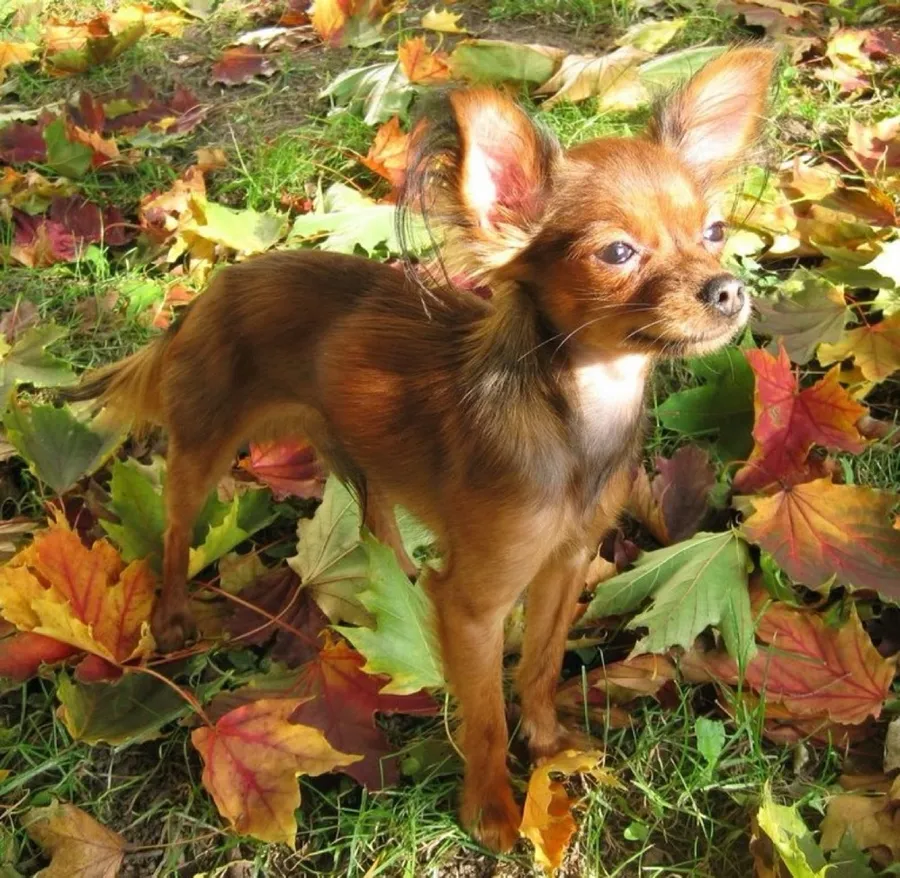
Russian Toy
Also known as Russkiy Toy, Russian Toy Terrier
The Russian Toy descends from English Toy Terriers that were popular with the Russian aristocracy in the early 1900s. Numbers fell sharply after the Russian Revolution, and in the 1950s Russian breeders revived the breed, adding a long-coated variety. It entered the AKC's Foundation Stock Service, moved to the Miscellaneous class in 2018, and was fully recognized in the Toy Group in 2022. It is among the smallest recognized breeds.
At a glance
- Origin
- Russia
- Developed
- Early 1900s; revived in the 1950s
- Bred for
- Companionship for the Russian aristocracy
- Height
- 8–11 in
- Weight
- Up to 6.5 lb
- Life span
- 12–14 years
- Size
- Toy
- Coat
- Smooth (short and glossy) or long (with fringed ears); black and tan, blue and tan, brown and tan, red, and other colors
- Grooming
- Low
- Shedding
- Moderate
- Exercise
- About 30 minutes a day of walks and indoor play
- Recognized by
- American Kennel Club, Fédération Cynologique Internationale, The Kennel Club (UK)
Good to know
Russian Toys are lively and eager, so short training sessions and play keep them happy. Their fine bones make them vulnerable to falls and rough handling. They need warmth in cold weather and regular dental care.
Health considerations
- Patellar luxation
- Dental disease
- Retained puppy teeth
Conditions breed clubs commonly screen for. Not every dog will have them. Ask your veterinarian about your own dog.
Did you know?
The long-coated Russian Toy was developed in Moscow in 1958, when a smooth-coated pair produced a puppy with fringed ears.
Toy group
Small companion breeds, many developed for life alongside people. Small in size but often big in personality; they still need training, enrichment, and gentle handling.
Every Russian Toy is an individual.
Breed traits are tendencies, not guarantees. Your dog's genetics, early life, health, and everyday experiences all shape who they are. If you'd like help understanding the dog in front of you, let's talk.
Start a conversation