Breeds Foundation Stock Service
Spanish Mastiff
Also known as Mastín Español
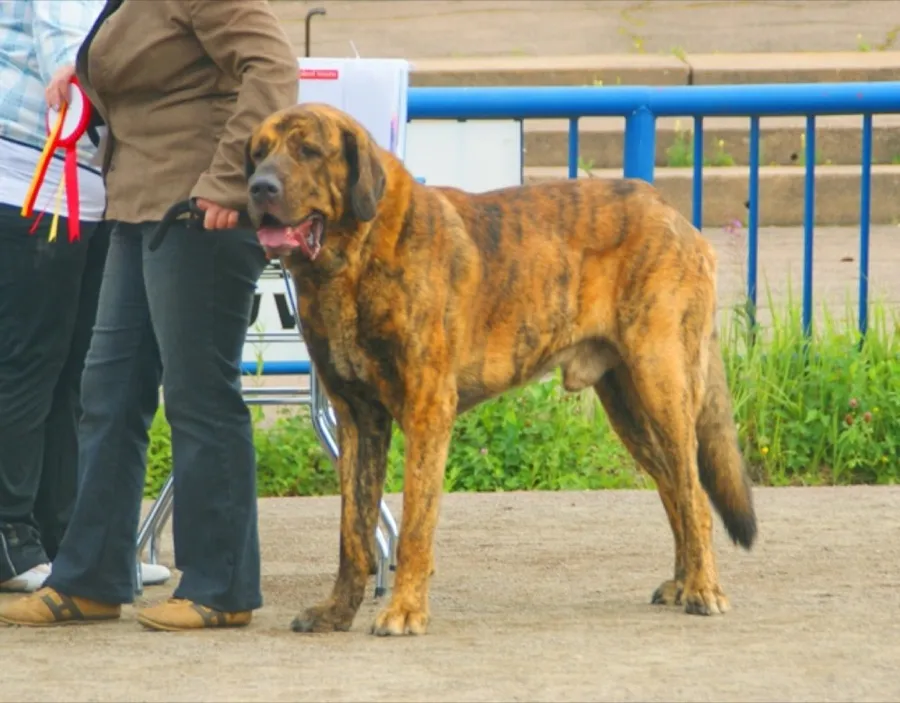
The Spanish Mastiff guarded Merino sheep on Spain’s long seasonal migrations, protecting flocks from wolves along ancient livestock routes. It is a massive but composed dog, known for its deep bark. With its family it is calm, gentle, and affectionate, while remaining watchful of strangers.
At a glance
- Origin
- Spain
- Developed
- Ancient
- Bred for
- Guarding migrating flocks from wolves
- Height
- 28–35 in
- Weight
- 140–220 lb
- Life span
- 10–12 years
- Size
- Giant
- Coat
- Medium-length, thick coat; fawn, red, black, wolf gray, or brindle, with or without white
- Grooming
- Moderate
- Shedding
- Heavy
- Exercise
- Moderate daily walks
- Recognized by
- United Kennel Club, Fédération Cynologique Internationale
Good to know
Spanish Mastiffs grow slowly and need careful puppy nutrition and joint care. Early training is key while they are still easy to handle.
Health considerations
- Hip dysplasia
- Elbow dysplasia
- Bloat (gastric dilatation-volvulus)
Conditions breed clubs commonly screen for. Not every dog will have them. Ask your veterinarian about your own dog.
Did you know?
Spanish Mastiffs are among the largest dog breeds, with males standing at least 30 inches at the shoulder.
Foundation Stock Service group
An AKC record-keeping program for rare and developing breeds that are not yet fully recognized. Many are well established in their home countries.
Every Spanish Mastiff is an individual.
Breed traits are tendencies, not guarantees. Your dog's genetics, early life, health, and everyday experiences all shape who they are. If you'd like help understanding the dog in front of you, let's talk.
Start a conversation