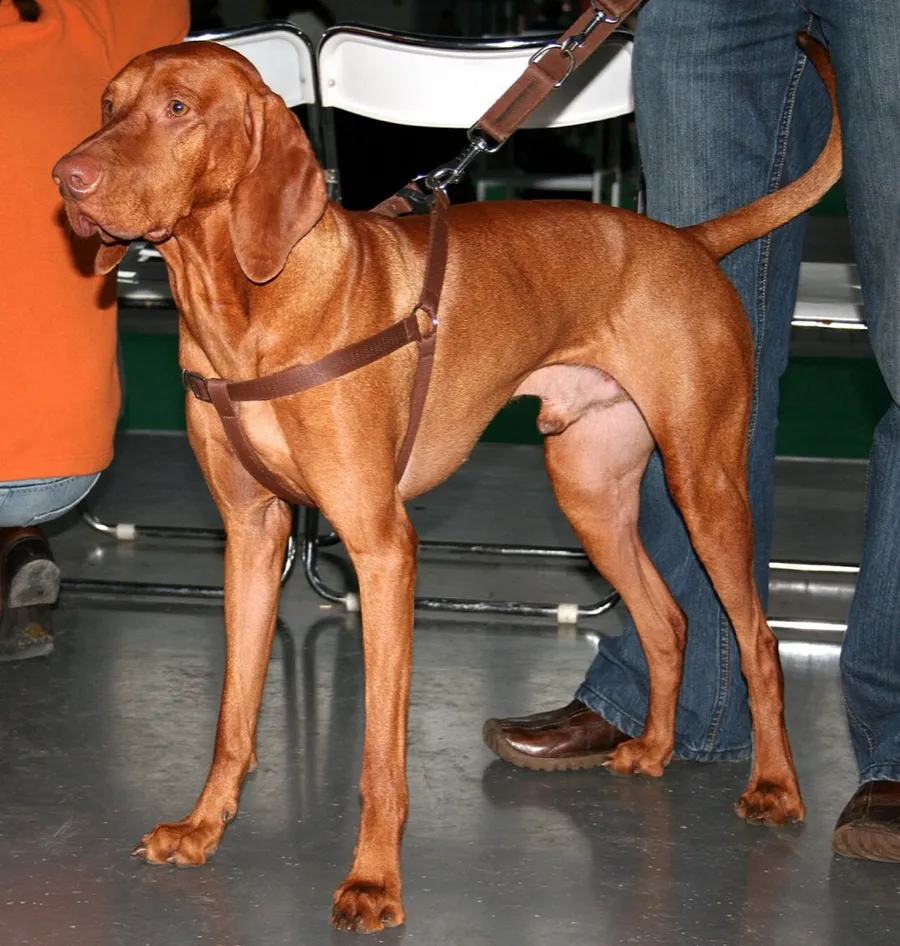
Breeds Sporting
Vizsla
Also known as Hungarian Vizsla, Hungarian Pointer, Magyar Vizsla
The Vizsla's ancestors are believed to have accompanied Magyar tribes into the Carpathian Basin, and the breed was later refined by Hungarian nobility as a pointer and retriever. It nearly disappeared after the World Wars, but Hungarian emigrants helped preserve it abroad. Vizslas are known for their athleticism and their strong attachment to their people.
At a glance
- Origin
- Hungary
- Developed
- Centuries old; modern breed refined in the 1800s–1900s
- Bred for
- Pointing and retrieving game birds and hare
- Height
- 21–24 in
- Weight
- 44–60 lb
- Life span
- 12–14 years
- Size
- Medium
- Coat
- Short, smooth, dense coat; solid golden rust in various shades
- Grooming
- Low
- Shedding
- Moderate
- Exercise
- 1–2+ hours a day of running and vigorous activity
- Recognized by
- American Kennel Club, United Kennel Club, Fédération Cynologique Internationale, Canadian Kennel Club, The Kennel Club (UK)
Good to know
Vizslas need substantial daily exercise and close companionship, and they may struggle when left alone for long periods. Gentle, clear, consistent training works well with this sensitive breed.
Health considerations
- Hip dysplasia
- Epilepsy
- Hypothyroidism
- Sebaceous adenitis
Conditions breed clubs commonly screen for. Not every dog will have them. Ask your veterinarian about your own dog.
Did you know?
Vizslas are often nicknamed 'Velcro dogs' because they like to stay right by their owner's side.
Sporting group
Retrievers, pointers, setters, and spaniels, developed to help hunters find and retrieve game. Typically active, people-focused, and happiest with regular exercise and a job to do.
Every Vizsla is an individual.
Breed traits are tendencies, not guarantees. Your dog's genetics, early life, health, and everyday experiences all shape who they are. If you'd like help understanding the dog in front of you, let's talk.
Start a conversation