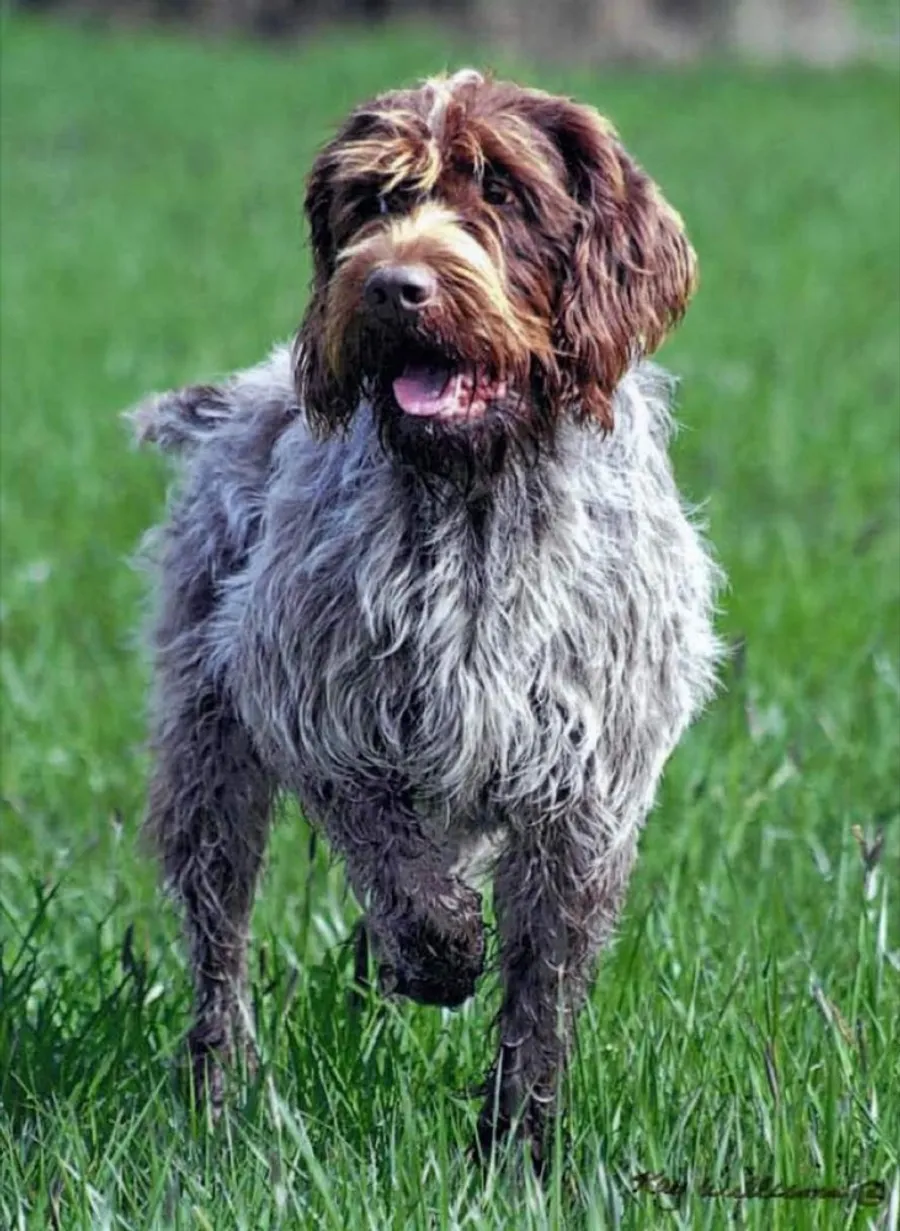
Breeds Sporting
Wirehaired Pointing Griffon
Also known as Korthals Griffon, Griffon, WPG
The Wirehaired Pointing Griffon was developed by Eduard Karel Korthals, a Dutchman who carried out much of his breeding program in Germany and France in the late 1800s. He aimed to create the ideal versatile gun dog for hunters on foot. Griffons are close-working hunters, known for their affectionate, good-humored nature and strong bond with family.
At a glance
- Origin
- Netherlands and France (developed by E. K. Korthals)
- Developed
- Late 1800s
- Bred for
- Versatile hunting: pointing and retrieving on land and in water
- Height
- 20–24 in
- Weight
- 35–70 lb
- Life span
- 12–15 years
- Size
- Medium
- Coat
- Medium-length, harsh, wiry double coat with a beard and eyebrows; steel gray with brown markings, or brown
- Grooming
- Moderate
- Shedding
- Minimal
- Exercise
- 1–2 hours a day of active exercise
- Recognized by
- American Kennel Club, United Kennel Club, Fédération Cynologique Internationale, Canadian Kennel Club, The Kennel Club (UK)
Good to know
Griffons need daily exercise and like to be involved in family life. Their coat needs weekly brushing and occasional hand-stripping, and they respond well to clear, consistent training.
Health considerations
- Hip dysplasia
- Entropion and ectropion
- Ear infections
Conditions breed clubs commonly screen for. Not every dog will have them. Ask your veterinarian about your own dog.
Did you know?
Fanciers sometimes call the Griffon 'the supreme gundog' because it was purposefully designed to point, track, and retrieve in any terrain.
Sporting group
Retrievers, pointers, setters, and spaniels, developed to help hunters find and retrieve game. Typically active, people-focused, and happiest with regular exercise and a job to do.
Every Wirehaired Pointing Griffon is an individual.
Breed traits are tendencies, not guarantees. Your dog's genetics, early life, health, and everyday experiences all shape who they are. If you'd like help understanding the dog in front of you, let's talk.
Start a conversation